
WhatsApp Screenshots in a PoSH Inquiry: What Makes Digital Evidence Reliable?
A practical guide for Internal Committees assessing WhatsApp screenshots: preserve submitted material, examine identity and context, test disputes fairly and…

The Supreme Court on Tuesday turned down a plea to bring political parties under the POSH Act, remarking that widening its scope could invite unintended misuse and open a Pandora’s box. It is imperative for our readers to understand that this ruling doesn’t only bar the Act from extending to political parties but also raises…
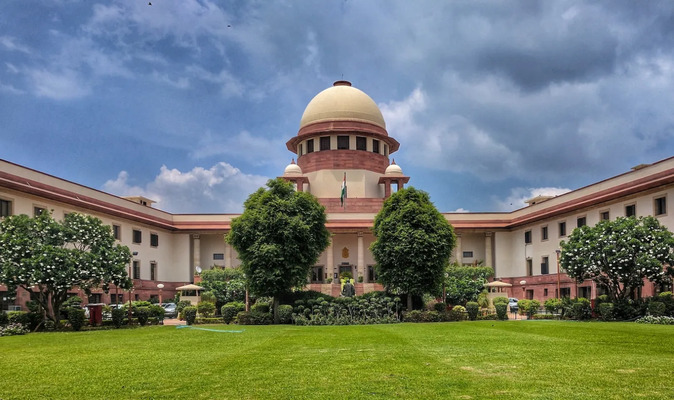
The Supreme Court on Tuesday turned down a plea to bring political parties under the POSH Act, remarking that widening its scope could invite unintended misuse and open a Pandora’s box. It is imperative for our readers to understand that this ruling doesn’t only bar the Act from extending to political parties but also raises broader questions about how far workplace protections can stretch in non-traditional setups. Further in the article we’ll explore this judgement and it’s implications.
The case stemmed from a petition filed by advocate Yogamaya M.G., challenging a 2022 Kerala High Court ruling that held political parties are not required to set up Internal Complaints Committees (ICCs) under the POSH Act, since party workers do not share a conventional employer-employee or wage-based relationship with the parties.
The petitioner contended that this exclusion leaves women in politics exposed and without adequate safeguards, highlighting systemic harassment and the absence of grievance redressal mechanisms within most parties.

Citing data on the widespread abuse faced by women in political spaces, the plea also referred to reports by UN Women and the Inter-Parliamentary Union to argue for a broader interpretation of “workplace” that would encompass political participation, whether formal, voluntary, or informal.
The petition emphasized that the POSH Act, rooted in the Supreme Court’s landmark ruling in Vishaka v. State of Rajasthan, was designed to ensure expansive protection.
It argued that the Act’s definitions of “employer,” “employee,” and “workplace” were intentionally drafted in broad terms to serve the legislation’s beneficial purpose.
However, both the Kerala High Court and Supreme Court emphasized that, under the POSH Act,
“the requirement to form an ICC applies only to organizations and establishments that operate as workplaces with employees—criteria that political parties, being voluntary associations, do not meet.”
Supreme Court made clear that political parties are not subject to the PoSH Act, because such organizations are not workplaces in the legal sense and there is no employer–employee relationship between parties and their members.
The Supreme Court stated that bringing political parties under the POSH Act would “open a Pandora’s box,” suggesting that legislative, not judicial, intervention is needed to amend the law for wider coverage
The Court emphasized that the issue requires legislative action rather than judicial intervention and left the responsibility of amending the law to Parliament.
Workplace under the POSH Act, 2013, is broadly defined to protect against sexual harassment across diverse settings, including traditional offices, virtual spaces, unorganized sectors, and homes of domestic workers. The definition of workplace includes offices, hospitals, educational institutions, sports facilities, places visited during employment, and employer-provided transportation. In the unorganized sector, workplaces with fewer than 10 employees are covered through district-level Local Committees, ensuring grievance redressal where Internal Committees cannot be formed. Courts have also recognized virtual and remote workplaces, holding that online communication, emails, and digital interactions fall within the scope of a workplace under POSH. Furthermore, the concept of an extended workplace covers locations visited for work and travel, ensuring continuous protection for employees.
The Supreme Court’s ruling clarifies the scope of the POSH Act and reinforces the principle that its protections apply to defined workplaces with an employer-employee relationship. While political parties remain outside the Act’s ambit, the judgment highlights the broader challenge of extending workplace protections to non-traditional settings. For women in politics and other voluntary or informal sectors, this underscores the need for legislative measures to ensure safety and redressal mechanisms. Ultimately, the decision reaffirms that expanding legal protections requires careful consideration of structure, accountability, and potential misuse, leaving Parliament to determine the path forward.


Backed by enterprise-grade security and compliance
Your sensitive workplace data deserves the highest level of protection. We maintain rigorous security standards and compliance certifications to ensure your organization's information remains secure, confidential, and audit-ready.
View Security Center