From Passion to Profession: How Cricket’s Workplace Got Ungendered
Cricket was once called a gentleman’s game. Today, that word stands corrected. There are victories that rewrite scorecards, and then there are those that rewrite systems.India’s 2025 Women’s World Cup win sits firmly in the latter. When Harmanpreet Kaur lifted that 11-kilogram trophy on 2 November, she wasn’t just celebrating a match. She was claiming…
Cricket was once called a gentleman’s game. Today, that word stands corrected. There are victories that rewrite scorecards, and then there are those that rewrite systems.
India’s 2025 Women’s World Cup win sits firmly in the latter.
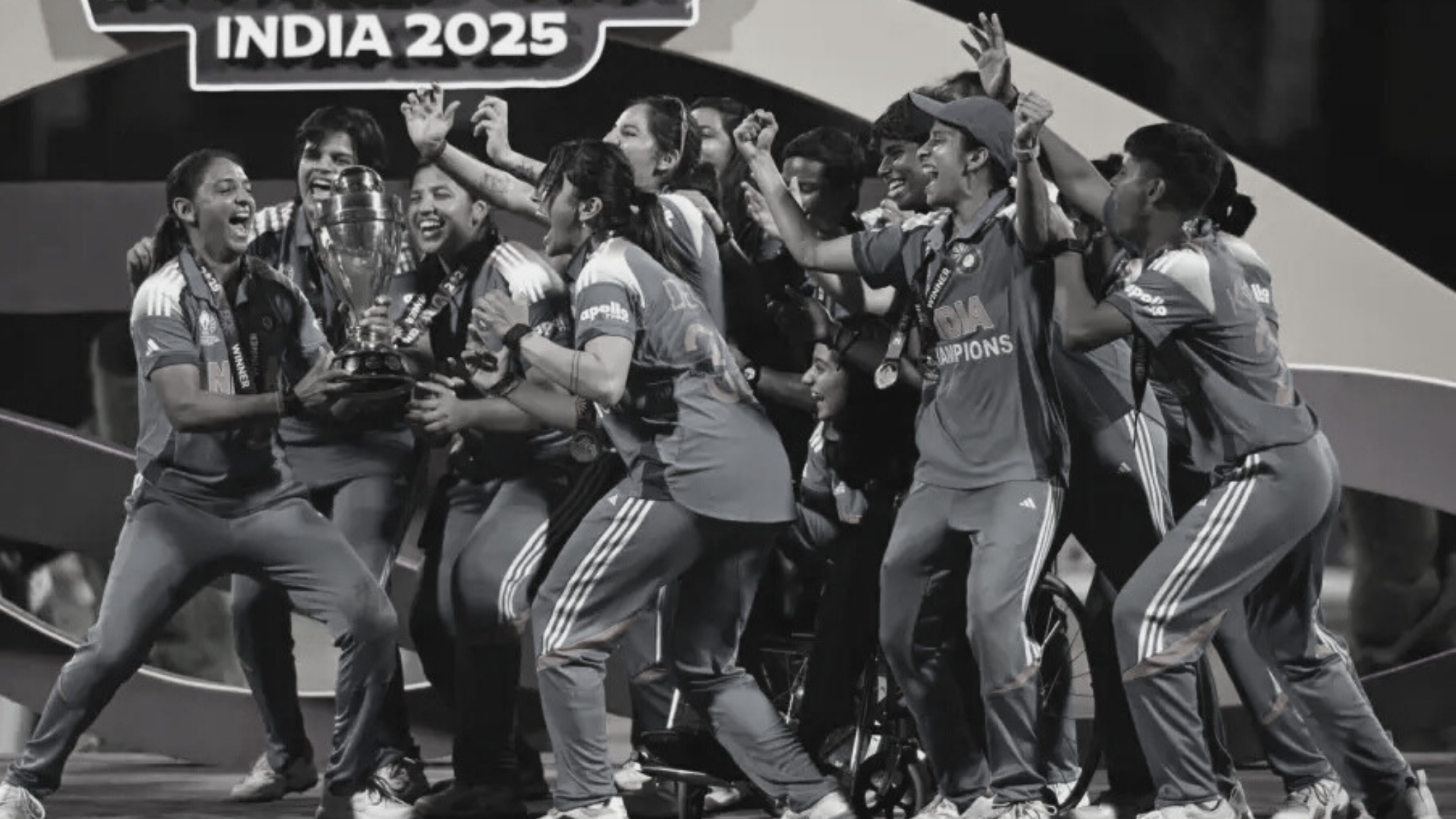
When Harmanpreet Kaur lifted that 11-kilogram trophy on 2 November, she wasn’t just celebrating a match. She was claiming space in one of the most unequal workplaces in India ,cricket.
At Ungender, we’ve long believed that gender bias hides most clearly in the places that appear meritocratic, in boardrooms, in startups, and yes, on the pitch. The cricket field has always been a workplace, one where pay, visibility, and recognition have been distributed along lines of gender, not just performance.
This is the story of how that workplace, once a closed boys’ club, slowly, and painstakingly, got ungendered.
The Original Workplace Bias: “Play if You Can Afford To”
In 1973, when the Women’s Cricket Association of India was founded, there was no concept of a salary, sponsorship, or media rights for women athletes.
What existed instead was permission, permission to play if you could afford to.
The early players, teachers, students, homemakers , balanced cricket between unpaid domestic work and unacknowledged professional labour. They were called “players,” but functioned more like volunteers of the nation’s pride project.
Shantha Rangaswamy, India’s first Test captain, remembered carrying her own kit in unreserved coaches, eating from plastic bowls, and sharing three bats among twenty players.
What she described was not hardship, it was the infrastructure of inequity.
It is the same pattern seen across workplaces: women are often told they are part of history in the making, while being asked to subsidise it with their unpaid effort.
A Decade of Sacrifice Disguised as Passion
Through the 1990s and 2000s, the Women’s Cricket Association of India ran on goodwill. Players survived on borrowed equipment, home-cooked meals from host families, and personal sacrifices made invisible through a single word: passion.
It was in this vacuum that actor Mandira Bedi’s intervention became symbolic. In 2004, she diverted her personal endorsement fee to fund the Indian women’s ODI series, a gesture that exposed what the system preferred to hide: the women’s team wasn’t struggling because it lacked merit, but because it lacked money.
The Economics of Recognition: Who Gets Paid to Dream
Cricket’s gender divide has always been as financial as it is social.
Money, after all, is the purest policy.
Before 2006, women’s cricket in India operated outside the commercial framework fueling men’s cricket, with limited financial backing and poor facilities. The Women’s Cricket Association of India (WCAI), formed in 1973, managed the sport with volunteer efforts and minimal funding. Women played unpaid or low-paid matches, facing difficult conditions like traveling by train and staying in dormitories.
In 2005, the International Women’s Cricket Council merged with the ICC, prompting the BCCI, last among top cricket nations, to absorb the WCAI in 2006. ,however, disparities remained stark: while men’s cricket enjoyed lucrative central contracts and corporate endorsements, women’s contracts were modest. The merger marked a crucial turning point but equality was achieved only gradually in the years that followed.
The 2017 Women’s World Cup was a turning point not just because India reached the final, but because 126 million people watched. Viewership became the currency of credibility — and for the first time, the market took notice.
In 2023, the Women’s Premier League (WPL) was born, reshaping the financial landscape of women’s cricket.
Smriti Mandhana’s ₹3.4 crore auction price wasn’t just a headline; it was a wage correction decades overdue. Franchise owners invested ₹400 crore in the inaugural league, and by 2025, prize money doubled to ₹15 crore.
Still, this is not parity, it is the beginning of economic inclusion.
While male cricketers continue to command ₹7 crore retainers and tenfold endorsement deals, the WPL showed that women’s talent could finally attract commercial confidence.
Sponsorship, too, is being rewritten. Brands that once viewed women’s sports as CSR-friendly gestures now see ROI in representation. For companies, aligning with women cricketers isn’t charity, it’s good economics.
That, perhaps, is the most powerful form of gender progress: when inclusion stops being sentimental and becomes profitable.
Merger and Margins: The Corporate Takeover of Cricket
When the BCCI absorbed the Women’s Cricket Association, the workplace got an upgrade , flights instead of trains, uniforms instead of self-stitched jerseys, and allowances instead of gratitude.
But like every corporate merger, culture takes longer to integrate than policy.
Nine years passed before women got central contracts, and seventeen before they achieved pay parity in match fees. Yet, even as the BCCI’s 2022 “equal pay” announcement made global news, annual retainers still told another story:
| Category | Men (₹) | Women (₹) | Gap |
| Grade A+ | 7 crore | 50 lakh | 13x |
| Grade B | 5 crore | 30 lakh | 16x |
| Grade C | 1 crore | 10 lakh | 10x |
The system had evolved, but the economy of recognition hadn’t.
The Audience as Employer
If money speaks, audiences vote with their wallets.
And it is the audience, not the administrators, who have become the new employer of women’s cricket.
From 126 million viewers in 2017 to 190 million in 2025, women’s cricket has outgrown tokenism.
Each ticket sold, each sponsor signed, each jersey purchased contributes to a redistributive act, shifting wealth toward equality.
The market has finally learned what women athletes have known for decades: representation is good economics.
From Gentleman’s Game to Everyone’s Game
“Cricket is a gentleman’s game.”
It was once meant as praise.
Now it reads as exclusion.
Because in 2025, when Harmanpreet Kaur lifted the World Cup, it was not a gentleman’s victory, it was a collective one.
The sport that once treated women’s participation as novelty now sees it as a necessity.
This is not charity. It is capitalism finally catching up to fairness.
The Workplace Has Changed, the Work Continues
Cricket’s workplace has been rewired through persistence, policy, and proof of performance.
But as with all systems, progress must be maintained.
The next frontier isn’t equal pay, its equal power: equal sponsorship voice, board representation, and media visibility.
As cricket’s economy evolves, so must its ethics.At Ungender, we see this as more than a sporting milestone.
It’s an economic parable for every workplace learning to assign value without bias.
Because the future of work, and of cricket, belongs not to gentlemen, but to everyone.
Key takeaways
- India’s 2025 World Cup win marked a turning point for women’s cricket and gender equality.
- Real progress began when inclusion became profitable through the WPL and sponsorships.
- Equal match fees marked a breakthrough, but the next challenge lies in achieving equal representation.
Subscribe for insights that matter
Related Articles