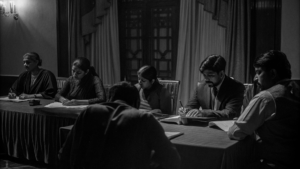
Empowering ICs: Escaping Over-Reliance on External Members
When the PoSH Act introduced the requirement of an External Member under Section 4(2)(c), the intent was straightforward: to bring in someone independent, trained, and experienced enough to help Internal Committees stay fair and neutral. The law did not envision a marketplace of External Members competing for engagement. It envisioned a steady outside voice that…

When the PoSH Act introduced the requirement of an External Member under Section 4(2)(c), the intent was straightforward: to bring in someone independent, trained, and experienced enough to help Internal Committees stay fair and neutral. The law did not envision a marketplace of External Members competing for engagement. It envisioned a steady outside voice that could offer distance, perspective, and guidance.
Over time, however, the role has shifted from that original idea. Today, across organisations large and small, External Members are often the most relied-upon, the least clearly understood, and the most inconsistently engaged part of the PoSH process.
The result is a pattern we now observe daily: an over-reliance that weakens the IC, paired with an under-structured relationship that weakens the process.
This long-form essay unpacks that pattern and what organisations need to do to build Internal Committees that are resilient, not dependent, and capable of delivering fairness irrespective of who the External Member happens to be.
The Original Purpose of the External Member Has Been Diluted Over Time
The PoSH Act introduced the External Member to add neutrality, expertise, and protection from internal influence, not to replace the Internal Committee or shift full responsibility for inquiries onto them. The role was meant to create balance, not dependency.
Over time, however, many organisations have come to rely on External Members as the primary source of procedural and legal guidance in PoSH inquiries. This can create practical challenges: Committees hesitate to proceed without the EM’s availability, processes slow when External Members are unavailable, institutional knowledge sits in personal notes, and continuity suffers when an EM disengages.
This drift moves practice away from the law’s original design and can leave organisations vulnerable to procedural gaps.
The Reality: External Members Come and Go More Easily Than Companies Expect
Unlike employees, External Members are not embedded in an organisation’s internal systems. They rotate, step down, adjust their professional commitments, or simply become unavailable over time. Organisations may change External Members due to workload constraints, differing expectations, or evolving organisational culture. What is intended to be a steady external perspective can, in practice, become intermittent.
This creates a practical challenge. Each External Member brings their own working style, approach to questioning, documentation practices, and interpretation of procedure. Even with consistency of intent, shifts in membership can disrupt continuity in how inquiries are conducted. And in PoSH processes, continuity is more than administration, it supports fairness, predictability, and trust in the system.
The Dependency Problem: When ICs Outsource Thinking to EMs
One common pattern we see: ICs rely on the EM for decisions they should own themselves. They defer on what to ask in hearings, interpreting statements, deeming evidence valid, spotting contradictions, drafting recommendations, meeting timelines, and even final outcomes.
But Section 11 places responsibility squarely on the IC, the EM supports, doesn’t decide. When ICs outsource thinking, two risks emerge.
First, they lose procedural confidence and freeze without the EM.
Second, the organization stays vulnerable. A dependency-driven case crumbles under scrutiny, as the IC can’t defend its own choices. We’ve seen EM opinions become the sole basis for recommendations, leaving ICs silent when questioned by management or authorities.
This isn’t defensible process, it’s borrowed judgment.
The Cultural Problem: Employees Feel the Instability
Employees might not know process details, but they sense inconsistency instantly. A new EM shifts communication tone, hearing question depth, MoM thoroughness. Some EMs attune emotionally; others stay procedural purists. Some speak with care; others bluntly.
When these changes ripple across cases, employees see the organization as unpredictable. Culture isn’t built on best-case scenarios, it’s built on repeatable ones. If an EM change alters your culture, it’s not owned by your organization. It’s owned by the person you empaneled.
The Legal Risk: When Documentation and Memory Live With the EM
External Member transitions can also create continuity gaps. When an EM steps away, personal notes, draft reports, contextual understanding of witnesses, and informal process knowledge often leave with them. If records are not centrally maintained, organisations may find themselves without a clear internal account of how key decisions were reached.
In practice, this can mean reconstructing case files, searching for missing documentation, or facing questions about process continuity in later reviews. These are not just administrative challenges, they affect an organisation’s ability to demonstrate that inquiries were handled consistently and fairly over time.
Sustainable governance depends on institutional memory living within the organisation, not resting solely with external consultants.
Best Practices: What Strong IC–EM Partnerships Look Like
Strong ICs treat the EM as a compass not a crutch, building partnerships that blend expertise with internal ownership.
In these healthy systems:
- The IC leads the inquiry; the EM guides direction.
- The IC drafts; the EM reviews.
- The IC holds documentation; the EM clarifies thinking.
- The IC owns the process; the EM strengthens it.
This is true partnership, not dependency, dominance, or abdication. When balanced, organizations sustain continuity even if an EM departs, keeping capability with the IC as the law intended.
Common Pitfalls Organisations Keep Making
Across thousands of cases and ICs we’ve supported, recurring patterns emerge. Companies assume a “good” External Member fixes everything: they’ll track timelines, draft tough sections, interpret contradictions, handle legal details, and manage hearings.
But the EM isn’t the process. These assumptions lull ICs into procedural passivity.
We hear it constantly: “What if the EM is unavailable?” The honest answer: Your process should never collapse over one person’s absence. If it does, the system was broken from the start.
Why Strong Companies Move Toward Structured EM Models
Mature organizations make the EM role predictable, bounded, and infrastructure-backed, ensuring no single person’s availability controls workplace justice.
That’s why leading companies:
- Empanel via structured networks
- Use EMs for guidance, not execution
- Build internal IC capabilities
- Document centrally, not individually
- Leverage platforms like Conduct for seamless continuity
This builds a hard-to-replicate edge: fairness untethered from who’s in the room. That’s the hallmark of a strong IC.
The Future of the External Member Role in India
We’re entering an era of heightened scrutiny for EMs: greater accountability, neutrality demands, and procedural rigor. District officers seek structured documentation. Boards probe compliance more often. Empowered employees file sharper complaints. Hybrid work expands case footprints.
In this landscape, EMs can’t remain patchwork fixes for unstable systems. They must integrate into robust infrastructure, where platforms bear the load and people deliver judgment.
EMs will always matter, but they were never the full system. Over-reliant organizations will falter; those building IC strength and platform governance won’t.
The Path Forward
The question isn’t whether you need an External Member, the law settles that.
It’s this: Do you want an IC that crumbles without the EM, or one that thrives confidently because the system outlasts any individual?
Platforms like Conduct, paired with supported by Ungender’s External Member network, stabilize EM relationships,keeping capability internal while expertise stays accessible. This is the healthiest, strongest, most defensible model.
It’s what organizations need for stable, fair, resilient cultures, no matter who comes and goes.
Key takeaways
- External Members are meant to guide PoSH inquiries, not replace Internal Committee ownership.
- Over-reliance on External Members weakens continuity, confidence, and defensibility of IC processes.
- Strong PoSH governance keeps capability internal while using External Members as structured support.
Subscribe for insights that matter
Related Articles