
How New Labour Laws Are Ungendering Workplaces?
Replacing a fragmented legacy framework, India’s new labour codes streamline compliance while extending protections to previously underserved worker groups, including contract, gig, and platform workers, and strengthening workplace inclusion for women. What are the new laws and what are they replacing? Until recently, India’s workplaces were governed by 29 fragmented labour laws. The four new…
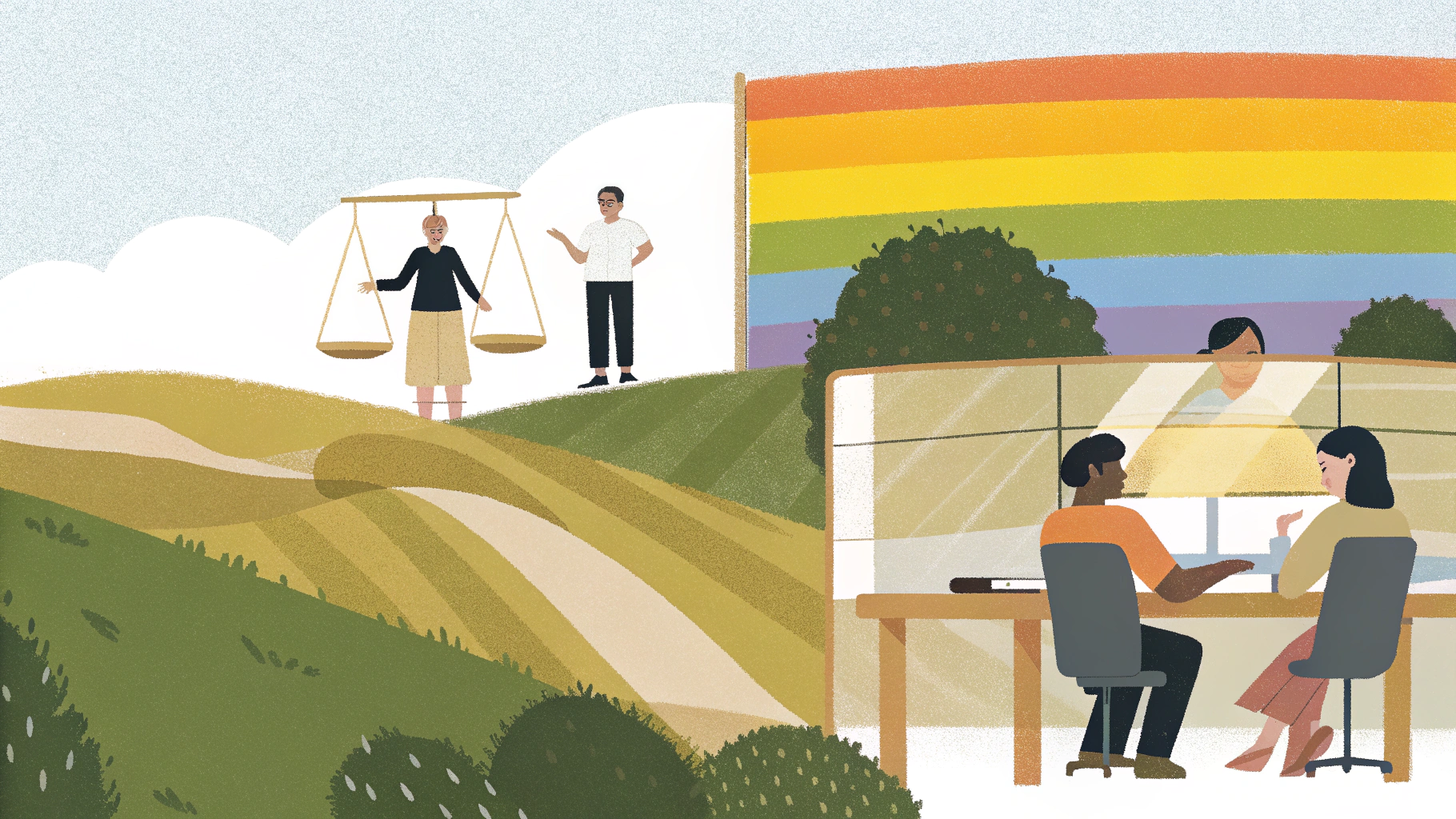
Replacing a fragmented legacy framework, India’s new labour codes streamline compliance while extending protections to previously underserved worker groups, including contract, gig, and platform workers, and strengthening workplace inclusion for women.
What are the new laws and what are they replacing?
Until recently, India’s workplaces were governed by 29 fragmented labour laws. The four new labour codes replace this patchwork with a unified framework, promising simpler compliance for employers and clearer rights for workers in today’s economy, including contract, platform, and other non-traditional forms of work.
The four new labour codes are:
- The Code on Wages, 2019, brings all wage rules under one roof. It sets a floor wage for everyone, pushes for salaries to be paid on time, and makes it clear that men and women must be paid equally for the same work.
- The Industrial Relations Code, 2020, deals with how workers organize, how disputes are handled, and how fixed-term jobs work.
- The Code on Social Security, 2020, widens the net of ESIC, EPFO, maternity benefits, and gratuity so that more people are covered, including gig workers and those in the informal sector who were earlier left out.
- The Occupational Safety, Health and Working Conditions Code, 2020, focuses on safe and healthy workplaces. It sets rules for working conditions.
The real measure of these reforms lies in their ability to improve working conditions across core workforce groups, from contract and factory workers to gig workers and women employees.
How are these laws ungendering the workspace?
The earlier laws were drafted in the 1930s, were built around a male, factory-based workforce. They did not and could not anticipate what work in India looks like today: the rise of the service sector, more women in gig and platform jobs, digital and home-based work, and the specific safety risks women face in cities and smaller towns.
The new labour codes significantly raise the compliance bar on gender equality in the workplace. Discrimination in hiring, pay, or working conditions on the basis of gender is now explicitly prohibited, with financial penalties and enhanced consequences for repeat violations. Equal pay for equal work is no longer a policy aspiration but a statutory obligation, requiring employers to ensure that roles involving comparable skill, effort, and responsibility are remunerated without gender-based differentials.
For HR and workplace governance teams, this also extends to internal dispute mechanisms. The Industrial Relations Code mandates proportional representation of women on Grievance Redressal Committees, embedding gender representation into complaint-handling structures and strengthening internal accountability frameworks.
The codes further expand maternity and childcare obligations. Paid maternity benefits now cover biological, adoptive, and commissioning mothers, and establishments above the prescribed employee threshold must provide crèche facilities. These provisions directly impact workforce planning, benefits administration, and infrastructure readiness.
Another major shift lies in workforce deployment. Restrictions that previously excluded women from certain industries, night shifts, or higher-risk roles have been replaced with a consent-and-safety model. Employers may engage women across a wider range of functions including night work and hazardous environments, provided robust safety, transport, facility, and security measures are implemented. Work-from-home arrangements are also formally recognised where operationally feasible.
Taken together, these changes require HR leaders to revisit pay structures, grievance mechanisms, maternity policies, workplace safety protocols, and PoSH-aligned protections , not only to remain compliant, but to build credible inclusion and risk-management frameworks under the new regime.
Together, these changes open up many more jobs and timings for women, without asking them to trade off safety or care duties to stay employed.
Gig Workers Finally Finding a Voice.
Gig workers, earlier, didn’t had any legal recognition. For years, gig and platform workers did not exist in the eyes of core labour laws like the Payment of Wages Act, Minimum Wages Act or ESI Act. They were simply considered as “informal workers”and hence they didn’t had any rights.But the new labour laws, changed the scenario. The Code on Social Security clearly demarcates and defines them.
The law formally names platform workers, aggregators, platform work and brings them into the legal and social security net for the first time.
Welfare / Social Security Fund
Today, a huge chunk of India’s workforce operates as gig workers,freelancers like plumbers, carpenters, or delivery drivers without fixed jobs. The new Labour Codes formally define these as gig workers and introduce platform workers for those tied to apps like Zomato, Swiggy, Ola, Uber, or Urban Company. The platforms/apps used are called aggregators.
Now, all these gig workers have been brought under the ambit of social security. The responsibility for payment lies with their platform, i.e., the aggregator. These platforms will have to deposit 1% to 2% of their annual turnover with the government. With this, the government will create a Universal Social Security Fund, which will be used for the benefits of all gig and platform workers.
Portability of benefits
Gig and platform workers can now carry their social security benefits with them when they change companies or work for more than one app. Earlier, every time they switched, they basically had to start from zero. Now, when they register on the e‑Shram portal, they get a unique Aadhaar‑linked ID. This ID lets their benefits stay with them across different platforms, so there is more continuity and security.
Grievance redressal
The new laws do create a grievance route for gig and platform workers, but it is not a traditional, in-house system like for regular employees.
Under the Code on Social Security, 2020, the government can set up toll‑free helplines, call centres or facilitation centres to handle complaints from platform workers, especially around registration and social security benefits. This is new and did not exist earlier.
At the central level, platforms are not mandated to establish internal Grievance Redressal Committees for gig and platform workers in the manner required for regular employees under the Industrial Relations Code. Some states (like Karnataka and Rajasthan) are starting to build stronger, two‑level grievance systems in their own laws, but nationally, the main route for gig workers is still through these government‑run helplines and facilitation mechanisms, focused on social security, not every kind of dispute.
Imperfect, but opens an important conversation
The new labour laws are not flawless. Many provisions are still on paper, important regulations have not yet been put to the test in actual workplaces, and women and gig workers will continue to struggle to make these rights a reality. The laws don’t completely resolve issues with coverage, enforcement, and common conflicts. However, the law is now publicly questioning who is considered a worker, whose safety is important, and whose caregiving is valued. That change is important. It provides workers, unions, and civil society with something tangible to challenge and enhance. The framework is just the beginning, but at least the discussion about protecting new forms of labor and ungendering work has finally taken center stage in our labor laws.
Key takeaways
- India’s new labour laws expand legal protection to women, gig workers, and non-traditional workers.
- Gender equality is now embedded through equal pay, safety, and inclusive work conditions.
- While implementation is evolving, the reforms open a critical shift toward more inclusive workplaces.
Subscribe for insights that matter
Related Articles