
From Performative Compliance to Real Governance: Zooming into the Gaps in India’s Entertainment Industry
“The truth will set you free, but first it will cost you something.” — Anonymous In the world of entertainment, where creativity should soar freely, a harsh reality persists: many women face silence, invisibility, and sometimes outright retaliation when they speak out against harassment. This is not just an incident but a widespread issue. Shockingly,…
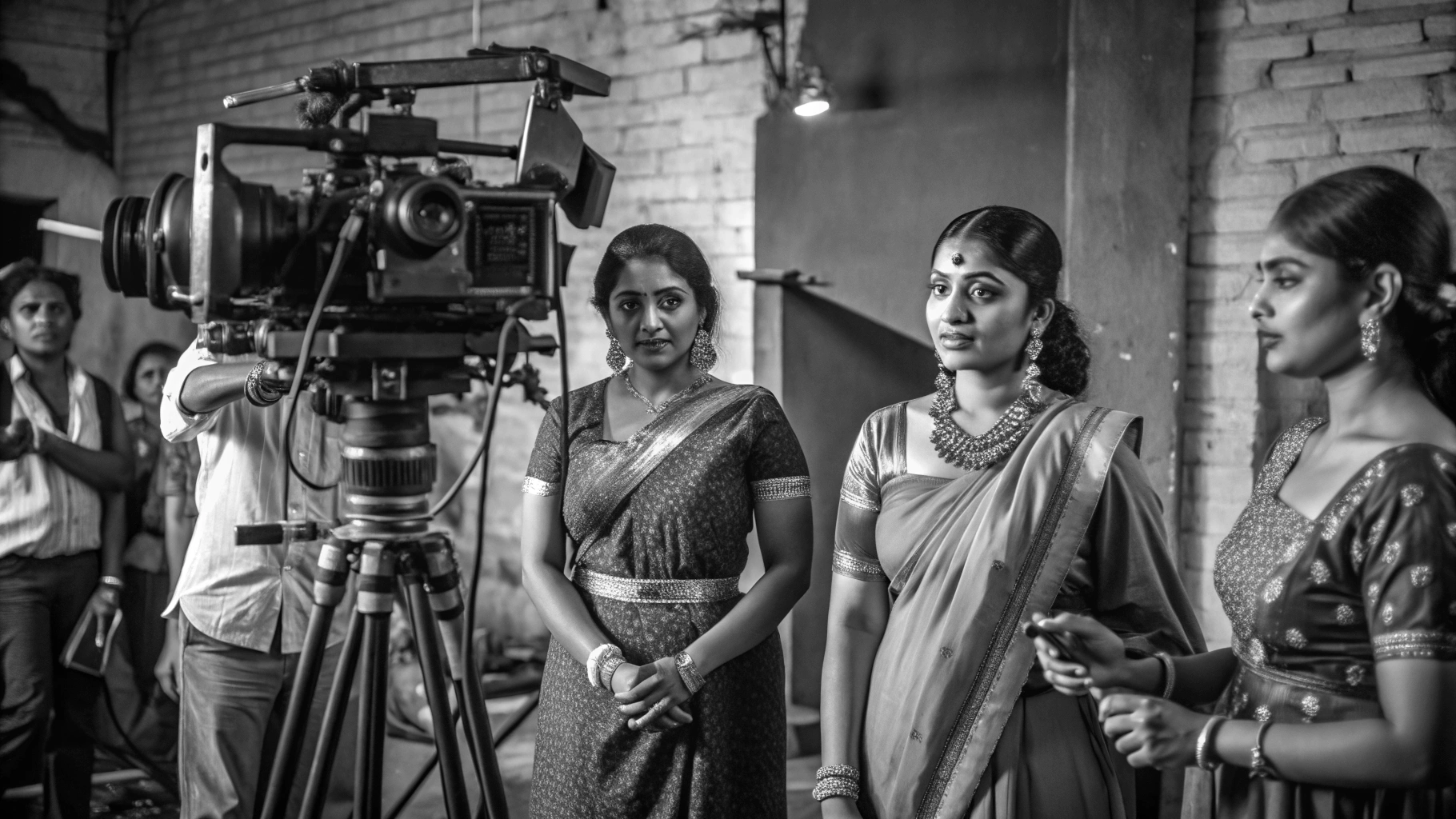
“The truth will set you free, but first it will cost you something.” — Anonymous
In the world of entertainment, where creativity should soar freely, a harsh reality persists: many women face silence, invisibility, and sometimes outright retaliation when they speak out against harassment. This is not just an incident but a widespread issue. Shockingly, a recent survey found that 1 in 3 female comedians were sexually harassed on stage, revealing how common and raw this problem remains even today.
The courage to break that silence often comes with a heavy price. Singer Alisha Chinai’s 1996 decision to file a sexual harassment case against a prominent music composer unveiled this painful truth. Her brave stand exposed a grim, systemic problem but cost her dearly; her voice was marginalized, career opportunities diminished, and the space that should have echoed with support was replaced with deafening silence.
Decades later, despite the progress sparked by movements like #MeToo and high-profile revelations, the entertainment industry still wrestles with deeply rooted power imbalances and normalized silence. This cost of speaking up should never overshadow the right to safety and dignity in a field dedicated to expression and creativity.
To understand why the industry that crafts stories of hope and resilience often stumbles in confronting its own injustices, we must look at its very nature: fragmented, largely informal, and dependent on personal networks rather than formal protections. Unlike structured corporate environments, entertainment is marked by fluid hierarchies, inconsistent contracts, and accountability tied more to influence than institutional frameworks, making change all the more urgent.
“Those who need the protection of the law the most are often the ones farthest from its reach.”- Pallavi Pareek, CEO Ungender
Is entertainment a disorganized sector?
Imagine a new makeup artist, exhausted and disheveled, arriving at a remote shoot location at 5 a.m. She doesn’t have a contract in hand, only a promise. She fears not just the uncertainty of her finances but also the overwhelming lack of clarity about what to do if something goes wrong. There is no one to turn to for protection or guidance, and the absence of formal support structures leaves her vulnerable and alone. This is what a disorganized industry truly looks like. Behind the camera, silence often feels safer than speaking up, even in an industry built on expression.
In a conversation with our CEO, veteran actor Sushant Singh reflected on how India’s entertainment industry continues to function as a largely disorganized sector. It’s a striking revelation that an industry built on crafting dreams for millions remains, in reality, fragmented and unstructured.
Sure, the PoSH Act is applicable to the unorganised sector as well, but implementation in industries like entertainment remains complex. With informal working arrangements, project-based contracts, and the absence of consistent HR structures, enforcing compliance becomes more about intent than infrastructure.
In the chaotic world of freelance gigs and short-term projects, like film sets or event crews, the lack of structured HR systems or clear employer-employee relationships leaves artists and crew members vulnerable when harassment occurs. Without a designated committee to handle complaints or a clear chain of command, reporting misconduct feels like shouting into a void, who do you turn to, and who’s responsible for taking action? In such a fluid work environment, simply having a policy on paper or holding annual training sessions isn’t enough. The industry needs practical solutions that move with the work itself.
As Sushant Singh put it, the very idea of a “workplace” in the entertainment industry is fluid and undefined. “From auditions to shoots to publicity parties , every place is a workplace,” he said, “but there’s no clear definition or protection.” He reflected on how, unlike corporate environments that have HR departments and formal policies, film and television workspaces shift constantly. “When your workplace is a hotel room or someone’s house, how do you ensure safety? Every shoot is a new workplace with no consistency, no fixed system to fall back on.”
The absence of clear and supportive structures in the entertainment industry leaves victims of harassment with no trusted authority to turn to, whether incidents occur at private events, promotional gatherings, or informal meetings. It’s no surprise, then, that nearly 79% of those who experience sexual harassment at work choose not to report it, a silence shaped as much by fear as by the absence of systems meant to protect them. Moreover, a stackling data was presented in the Guardian which said that over 94% women in Hollywood faced sexual harassment as per a survey conducted in 2018. These numbers are not mere statistics; they represent countless silenced voices, shattered trust, and ongoing pain in an industry that should be a place of creativity and safety.
As Sushant Singh poignantly said, “Kanun bacha nahi sakta, sirf saza de sakta hai” the law alone cannot save; it can only give permission to act.” Without actionable systems, the law remains a distant promise.
The Legal Dimension — When Protection Exists Only on Paper
Film critic Anupama Chopra, in a conversation with Ungender CEO Pallavi Pareek, shared a striking anecdote about the entertainment industry’s past: sets were so male-dominated that actresses often brought their mothers for protection, a subtle yet powerful signal to maintain boundaries in an environment where women felt vulnerable.
This glimpse into the industry’s history underscores a persistent truth: the law is in place, but not the intention in India. PoSH Act mandates that workplaces with 10 or more employees establish Internal Complaints Committees (ICCs) to address sexual harassment complaints, alongside requirements for awareness programs and visible display of penal consequences.
According to the Udaiti Foundation’s Women in India Inc survey of over 200 HR leaders, 59% of companies have yet to establish the mandatory ICC, falling short of this crucial legal requirement. Behind this statistic lies a serious consequence: for every company without an ICC, there is an individual who understands all too well that filing a complaint often leads to dead ends. This gap reveals a troubling disconnect between the law’s intent and real-world implementation, leaving women, especially in fragmented and informal sectors like entertainment, exposed and vulnerable. The lack of meaningful action undermines trust in the system and perpetuates an environment where fear and silence continue to prevail.
The Centre for Economic Data and Analysis (CEDA) at Ashoka University’s 2024 analysis of 300 NSE-listed companies (out of ~2,000) further reinforces this trend, with only 81 reporting PoSH complaints in FY 2022-23, indicating that 73% of sampled firms showed no activity.
This low reporting rate likely reflects not an absence of incidents but significant gaps in ICC functionality or existence, driven by inadequate setup, lack of awareness, or fear of retaliation. In the entertainment industry, where project-based work and fluid hierarchies dominate, these gaps are amplified.
The absence of ICCs in nearly three-fifths of surveyed companies signals a systemic failure to prioritize women’s safety, particularly in a sector where informal networks and power imbalances often overshadow formal structures. The implications of this non-compliance are profound, especially in entertainment, where Anupama Chopra’s anecdote highlights the historical insecurity women faced on male-dominated sets. Without functional ICCs, victims lack a clear avenue for redressal, forcing them into silence or informal resolutions that prioritize perpetrators’ reputations over justice.
This systemic failure to protect women in Indian entertainment finds a powerful echo in the Justice Hema Committee Report, which exposes the dark underbelly of the Malayalam film industry and its entrenched barriers to justice.
The Hema Report: A Mirror to the Industry’s Failures
The Hema Committee Report, which addresses the systemic challenges and gender-based discrimination faced by women in the Malayalam film industry, begins with a haunting reflection:
“The sky is full of mysteries, with the twinkling stars and the beautiful moon. But scientific investigation reveals that stars do not twinkle, nor is the moon truly beautiful.”
A fitting metaphor for an industry where glamour often conceals harsh realities.The genesis of the Justice Hema Committee report dates back to the February 17, 2017, sexual assault of a leading actress in Kochi, which led the Kerala government to form a three-member committee in July 2017 to investigate gender inequities in the Malayalam film industry.
Prompted by the Women in Cinema Collective (WCC), formed post-assault and including actresses like Parvathy Thiruvothu, the group petitioned Chief Minister Pinarayi Vijayan, demanding action on systemic issues after the incident implicated a prominent actor. The committee, led by retired Justice K. Hema alongside actor Sarada and former IAS officer K.B. Valsala Kumari, submitted a 295-page report in December 2019, with 233 pages released on August 19, 2024, following a court-ordered disclosure.
The report exposes a pervasive “casting couch” culture, where women face sexual demands and vulgar comments, with some accounts distinguishing “girls” from “women,” suggesting minors may be affected. An all-male “mafia” of influential actors, producers, and directors enforces unwritten bans, silencing dissent through career-ending retaliation.
Junior artists endure inhumane conditions: 19-hour shifts, no minimum pay, wages misappropriated by intermediaries, and lack of basic facilities like toilets or changing rooms, risking health issues like UTIs.
Social stigma and fear of public shaming deter women from reporting harassment, despite legal protections under the Indian Penal Code and POSH Act 2013. The report warns that ICCs, mandated by a WCC-driven 2021 court ruling, are undermined by powerful industry lobbies who intimidate or influence committee members to suppress complaints, rendering them ineffective.
This comprehensive investigation exposed not only the depth of exploitation but also the systemic barriers women face when seeking justice in the industry.
Aftermath of the Report
What followed after the submission of the Hema Committee report was a series of delayed government actions, court-directed public disclosures, and widespread industry and public debate, ultimately prompting demands for systemic reforms and protective mechanisms for women in Malayalam cinema.
The Hema Committee report’s partial release on August 19, 2024, unveiling systemic harassment and exploitation in the Malayalam film industry, ignited immediate action and public outcry. The Kerala High Court upheld the release of 233 redacted pages (out of 295), galvanizing calls for accountability.
On August 22, 2024, the Kerala High Court ordered the full report, including redacted sections, to be submitted in a sealed cover as part of a Public Interest Litigation seeking criminal proceedings against alleged offenders, signaling judicial intent to scrutinize sensitive details despite privacy concerns.
On August 25, 2024, the Kerala government formed a Special Investigation Team (SIT), led by IG G. Sparjan Kumar with four women IPS officers, to investigate the report’s allegations. The WCC praised this as a step toward justice, reflecting early momentum for reform.
By August 27, 2024, the Association of Malayalam Movie Artists (AMMA) dissolved its 2024–2027 executive committee amid allegations against members.
From late August to early September 2024, over 35 FIRs were filed against prominent figures, for alleged harassment and assaults dating back to the 1990s.
But by March 17, 2025, actress Parvathy highlighted unintended fallout: Malayali women, including actors and technicians, faced hiring hesitancy outside Kerala, worsening unemployment. On June 3, the SIT decided to drop all 35 report-linked cases, citing survivors’ non-cooperation due to career fears or “academic intent” in their depositions, with 26 of 40 total cases already dropped by June 9.
On June 25–26, 2025, the SIT confirmed to the Kerala High Court that all 35 cases were closed due to lack of victim statements, with the court scheduling a review for August 13, ahead of a government Film Conclave (August 2–3) to draft a new film policy.
As of 13th November 2025, no major convictions have occurred, the full report remains unreleased, and the SIT focuses on pre-report cases, with nodal officers supporting survivors.
The Road Ahead
The Hema Committee report’s revelations have set the stage for potential reform in the Malayalam film industry, with the Kerala government’s two-day Film Policy Conclave, held on August 2–3, 2025, in Thiruvananthapuram, marking a critical step toward drafting a comprehensive film policy. The conclave, aimed to address systemic issues like sexual harassment, inhumane working conditions, and lack of contracts, engaging stakeholders to implement recommendations such as mandatory ICCs and gender sensitization training.
However, the path forward requires broader industry transformation, as highlighted by film journalist Anupama Chopra in her interaction with Ungender. Chopra noted that early in her career, film sets were unsafe for women due to their male-dominated nature, with actresses often bringing their mothers for protection to signal boundaries. She emphasized that increasing women in technical and leadership roles, such as directors and cinematographers, has led to shift workplace dynamics, enhancing safety. She also pointed out how, after the onset of the Me Too movement, the Producers Guild of India unanimously amended its by-laws and mandated that all its member production houses implement the provisions of the PoSH Act.
Similarly, actor Sushant Singh, in discussions on industry reforms, underscored the vital role of unions like the Cine and TV Artistes’ Association or Writers’ Association. He argued that these unions can empower vulnerable workers by amplifying their voices, providing legal guidance, and pushing for accountability against powerful production houses, reducing the personal cost of speaking out against exploitation or harassment.
Nearly thirty years after Alisha Chinai’s brave decision to speak out in 1996, the weight of silence still looms over many in an industry built on sound and storytelling. Though conversations have grown louder and policies have become clearer, the gap between legal protection and real, everyday safety remains wide and painful. A 2023 Variety survey revealed that while some progress has been made, 59% of women in Hollywood feel the culture around harassment has improved, nearly half continue to face harassment or discrimination regularly, and almost 50% have left the industry out of fear or experience of abuse. These numbers are not just statistics; they represent real people whose courage costs them dearly.
It’s this human pain and resilience that fueled the purpose behind Ungender. We understand that laws alone cannot create safe workplaces, what’s needed is empathy, accountability, and systems that truly listen and protect. Ungender is committed to walking alongside individuals and organizations, helping to translate the promise of protection into lived reality. We write this not just to highlight the struggle, but to affirm that every voice matters and that safety and dignity at work are not privileges; they are rights that must be fought for, nurtured, and upheld. Because behind every statistic is a person, and behind every story of courage is a hope for lasting change.
Key takeaways
- Despite legal protections like the PoSH Act, India’s entertainment industry remains largely unorganized, leaving workers, especially women, vulnerable to harassment and retaliation.
- The Hema Committee Report exposes deep-rooted systemic failures, from the absence of ICCs to power imbalances that silence survivors and obstruct justice.
- True safety in entertainment requires not just laws on paper but active accountability, gender sensitization, and empathetic systems that protect and empower all workers.
Subscribe for insights that matter
Related Articles